
Outdoor lighting along the Wilmington coast has to do two jobs at once: create a warm, useful nighttime setting and hold up in a harsher environment than an inland system. Salt air, humidity, wind-driven rain, sandy soil, and fast-growing coastal landscaping all affect fixture selection, connections, placement, and maintenance.
That is why a coastal lighting plan should begin with the property, not a fixture catalog. A home in Wilmington, a sound-front property in Wrightsville Beach, and a beachfront home in Carolina Beach can each call for a different approach.
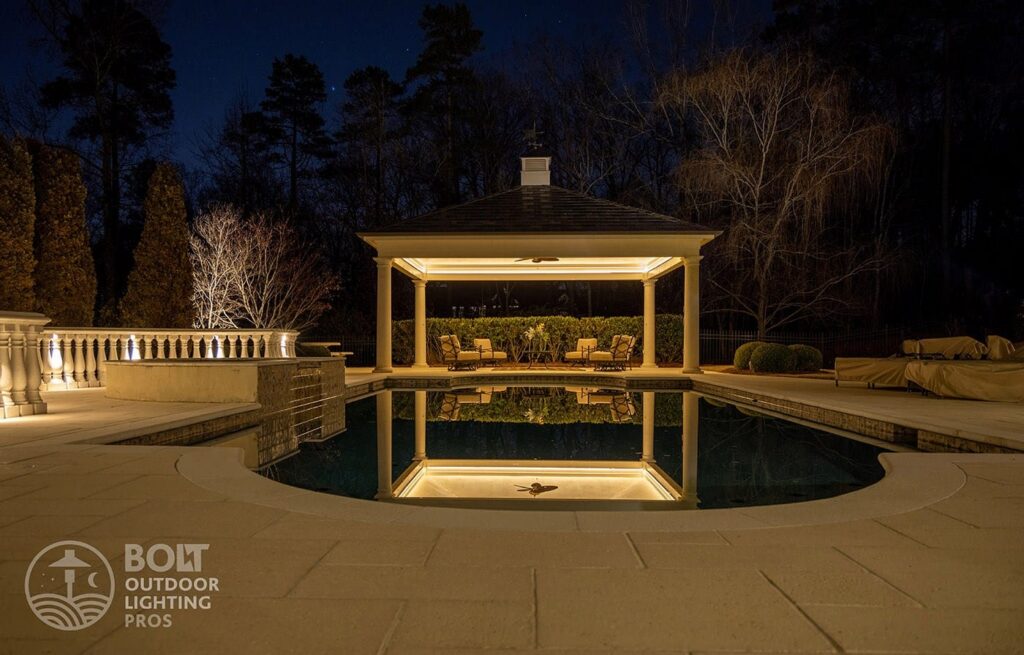
Choose fixtures for coastal exposure
Coastal air can accelerate corrosion, especially on exposed finishes and hardware. The North Carolina Department of Environmental Quality's lighting guidance specifically says environmental exposure should shape fixture construction and finish, and that luminaires used in coastal settings should resist salt-water corrosion. It also recommends outdoor fixtures rated for damp or wet locations.
For a homeowner, the practical questions are simple: Is the fixture body suited to salt exposure? Are fasteners and mounting parts equally durable? Are wire connections protected from moisture? Can serviceable parts be replaced later? The least expensive fixture can become the most expensive choice when finish failure or water intrusion forces early replacement.
Protect every connection from moisture
Many lighting failures begin at the connection rather than the lamp. In a humid, rainy environment, a poor splice can admit moisture, corrode, and create intermittent flicker or a dark zone. A coastal installation should use connection methods intended for direct burial and wet conditions, keep vulnerable components out of low spots where water collects, and leave the system accessible for future testing.
Use less light, placed more deliberately
Bright does not automatically mean better. Unshielded fixtures create glare, flatten architectural detail, spill onto neighboring properties, and make it harder to see beyond the illuminated area. A layered design uses controlled beams for entries, paths, steps, trees, walls, and gathering areas while preserving comfortable darkness between focal points.
Good aiming matters near water, too. Shielding the source and directing light only where it is needed improves comfort on patios and docks, reduces reflections, and keeps the night view from disappearing behind glare.
Beachfront lighting needs extra care
Properties visible from a nesting beach require a more careful plan. The North Carolina Wildlife Resources Commission explains that artificial light can misorient sea-turtle hatchlings and advises turning off exterior lights that face the beachfront during nesting season. Its conservation plan also notes that lighting rules vary by coastal municipality, including Wrightsville Beach and nearby beach towns.
Before installing beachfront lighting, confirm the current local requirements for that exact address. In general, the safer design direction is to use the lowest practical output, warm light, full shielding, careful aiming away from the beach, and controls that limit when lights operate. Local rules and wildlife guidance should take priority over a decorative concept.
Plan for wind, sand, and changing landscaping
Fixtures near dunes, beds, and walkways can shift when soil moves or maintenance crews work nearby. Palms, live oaks, ornamental grasses, and foundation plantings can also grow into a beam faster than expected. Good placement leaves room for growth, keeps fixtures out of traffic paths, and makes later cleaning and realignment straightforward.
Build maintenance into the design
A coastal system should be inspected periodically for finish changes, water intrusion, loose mounts, exposed cable, plant growth, dirty lenses, and shifted aim. Catching a compromised connection or moved fixture early is far easier than tracing a larger failure after several lights go dark.
A coastal outdoor lighting checklist
- Choose fixtures and hardware suited to salt, moisture, and direct outdoor exposure.
- Use wet-location and direct-burial connection methods where appropriate.
- Shield and aim every source to control glare and light spill.
- Confirm current beachfront and municipal requirements for the property.
- Plan controls around how the home is actually used after dark.
- Leave fixtures and connections accessible for cleaning, testing, and realignment.
- Schedule periodic maintenance before small coastal wear becomes a system failure.
Bolt Outdoor Lighting serves Wilmington, Wrightsville Beach, Carolina Beach, and surrounding coastal communities in addition to the Raleigh Triangle. Each design starts with the property, the nighttime experience the homeowner wants, and the environmental conditions the system must handle.